Deaf Driving Digital Experiences

Deaf Driving Digital Experiences

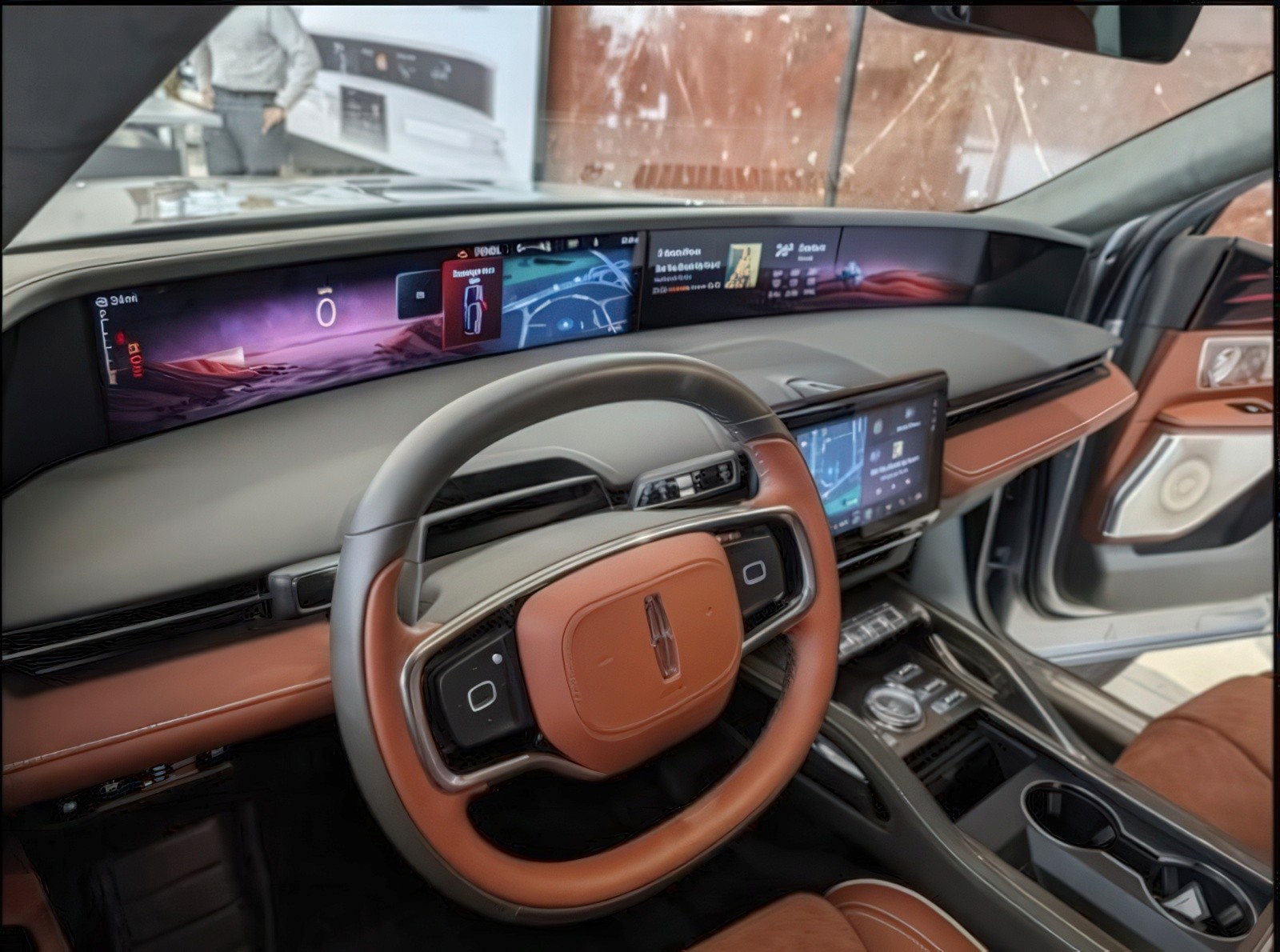
A trip with a childhood friend who is deaf revealed how many driving moments still rely on sound, sparking a broader accessibility journey. That experience helped lead to co-founding the Ford Accessibility Team to drive improvements across more areas of the vehicle.

A trip with a childhood friend who is deaf revealed how many driving moments still rely on sound, sparking a broader accessibility journey. That experience helped lead to co-founding the Ford Accessibility Team to drive improvements across more areas of the vehicle.

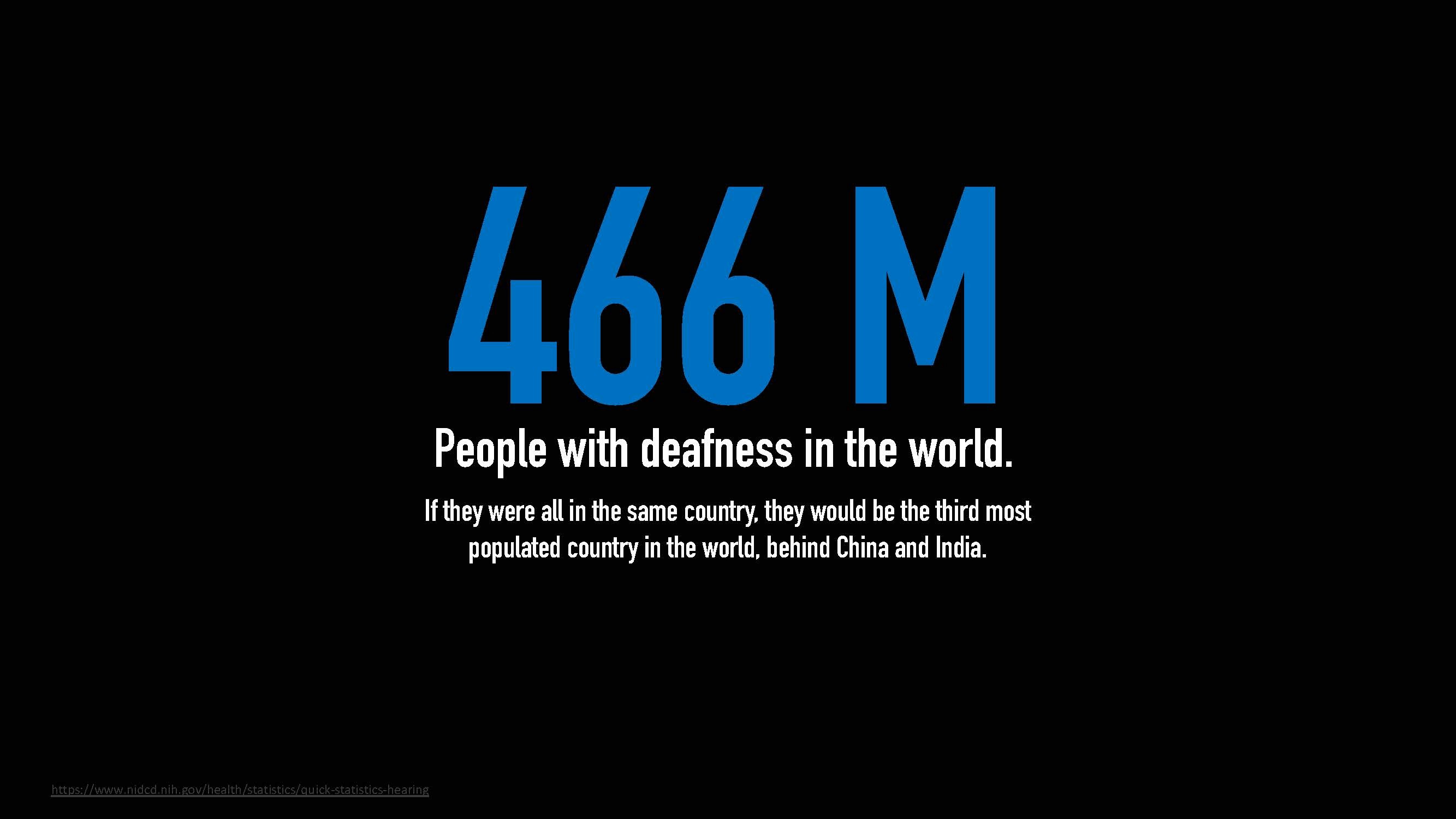
466 M Deaf People
466 M Deaf People
466 M Deaf People
Client
Ford Motor Company
CAtegory
Digital Experiences
ARTIST
Clay Carpenter
Designing Accessibility Across the Mobility Ecosystem

On a trip to Las Vegas, I spent time with a childhood friend who is deaf and noticed how many everyday driving moments assume you can hear, from spoken GPS prompts and in-car conversations to detecting emergency vehicles and ordering at a drive-thru. That experience pushed me into research and systems thinking, breaking the journey into distinct communication challenges and prioritizing what we could improve first. I started with audio and chime strategy, then brought the right teams together to expand the work into a broader accessibility initiative, defining an aspiration, a theory of advantage, and a strategic choice cascade to better serve diversely abled customers through more accessible in-vehicle, retail, and commercial experiences.


On a trip to Las Vegas, I spent time with a childhood friend who is deaf and noticed how many everyday driving moments assume you can hear, from spoken GPS prompts and in-car conversations to detecting emergency vehicles and ordering at a drive-thru. That experience pushed me into research and systems thinking, breaking the journey into distinct communication challenges and prioritizing what we could improve first. I started with audio and chime strategy, then brought the right teams together to expand the work into a broader accessibility initiative, defining an aspiration, a theory of advantage, and a strategic choice cascade to better serve diversely abled customers through more accessible in-vehicle, retail, and commercial experiences.


On a trip to Las Vegas, I spent time with a childhood friend who is deaf and noticed how many everyday driving moments assume you can hear, from spoken GPS prompts and in-car conversations to detecting emergency vehicles and ordering at a drive-thru. That experience pushed me into research and systems thinking, breaking the journey into distinct communication challenges and prioritizing what we could improve first. I started with audio and chime strategy, then brought the right teams together to expand the work into a broader accessibility initiative, defining an aspiration, a theory of advantage, and a strategic choice cascade to better serve diversely abled customers through more accessible in-vehicle, retail, and commercial experiences.


REIMAGINING EXISTING TECH

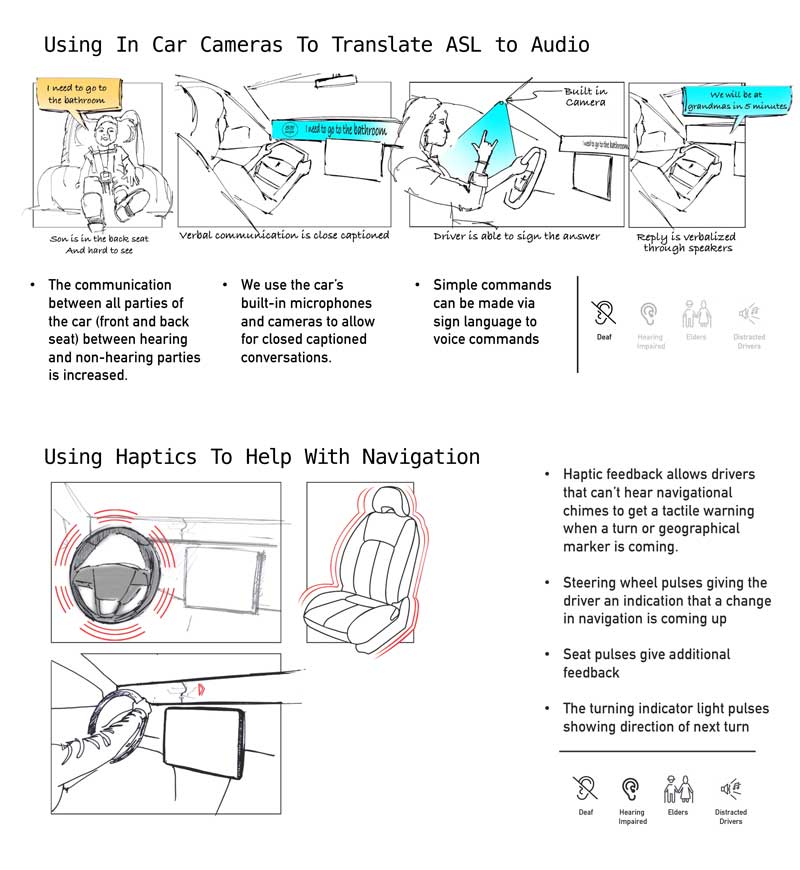
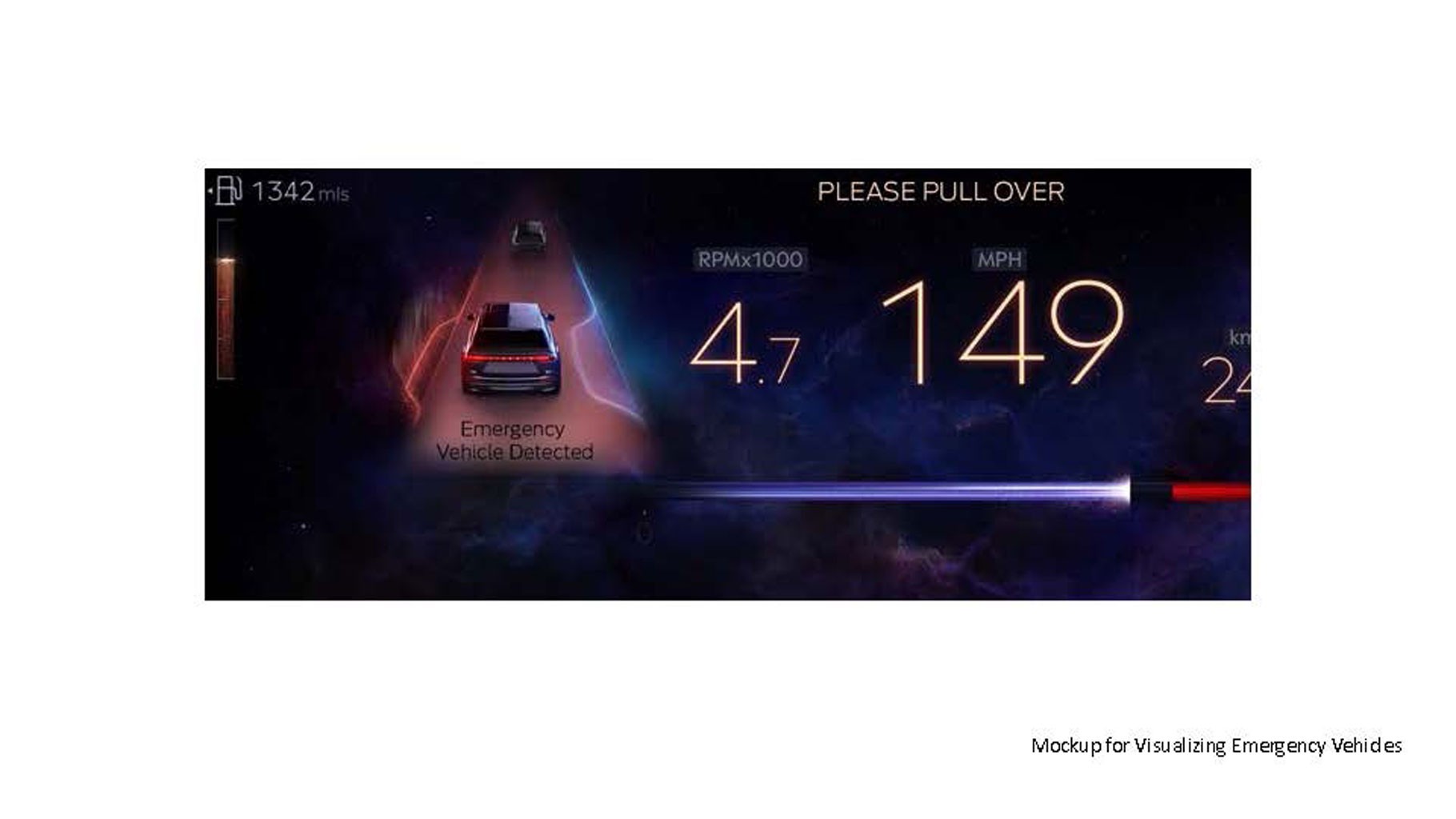
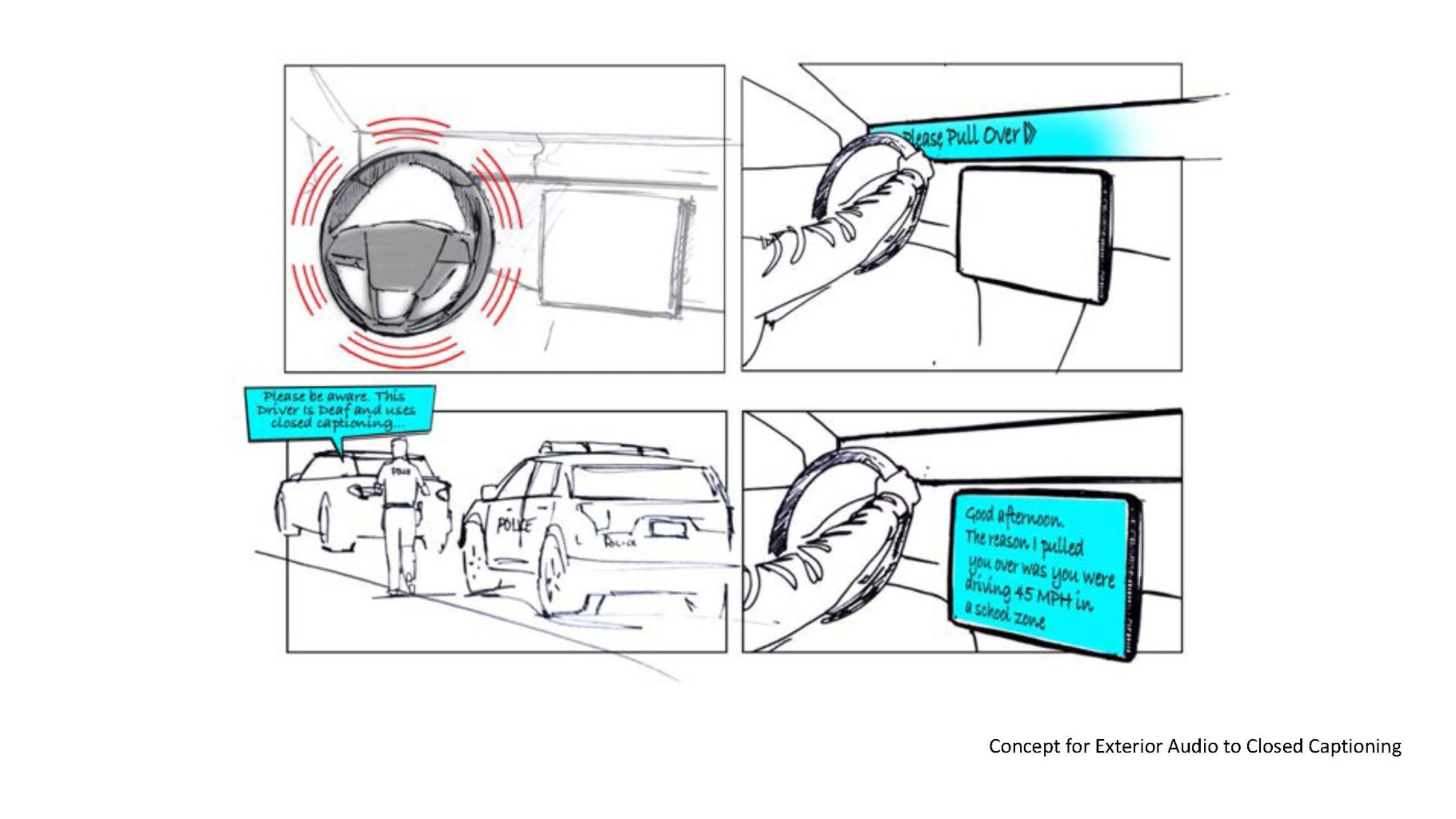
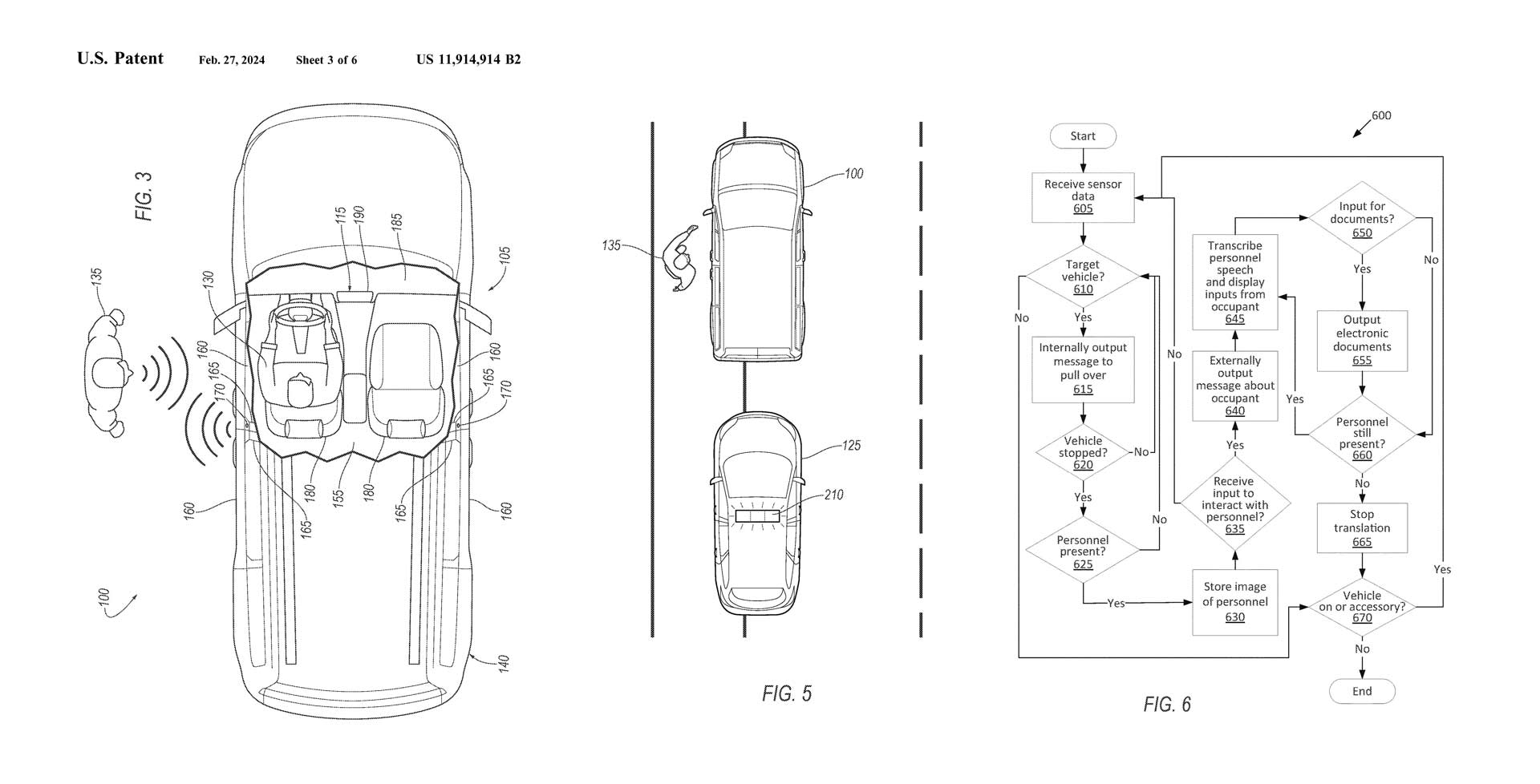
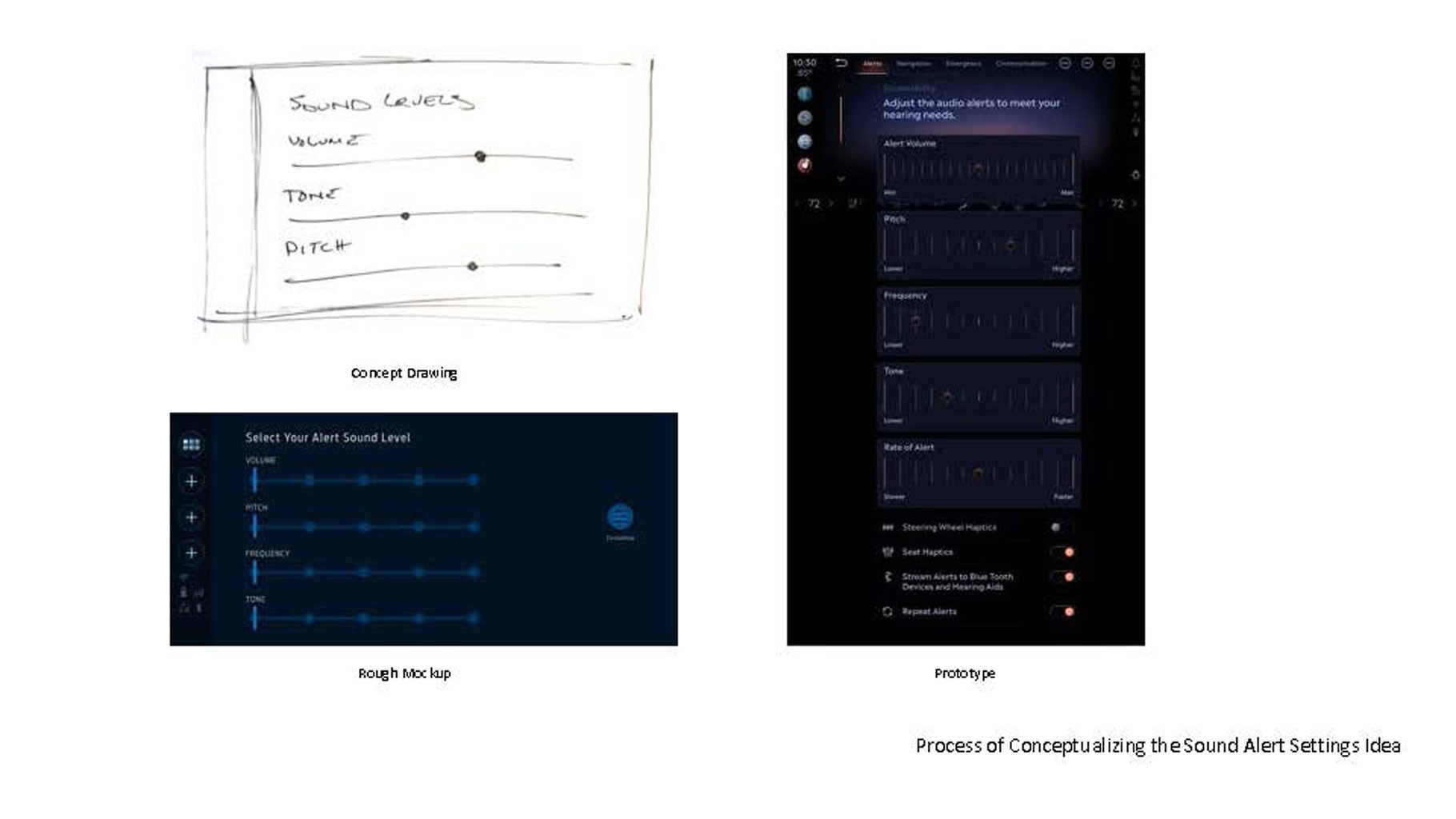
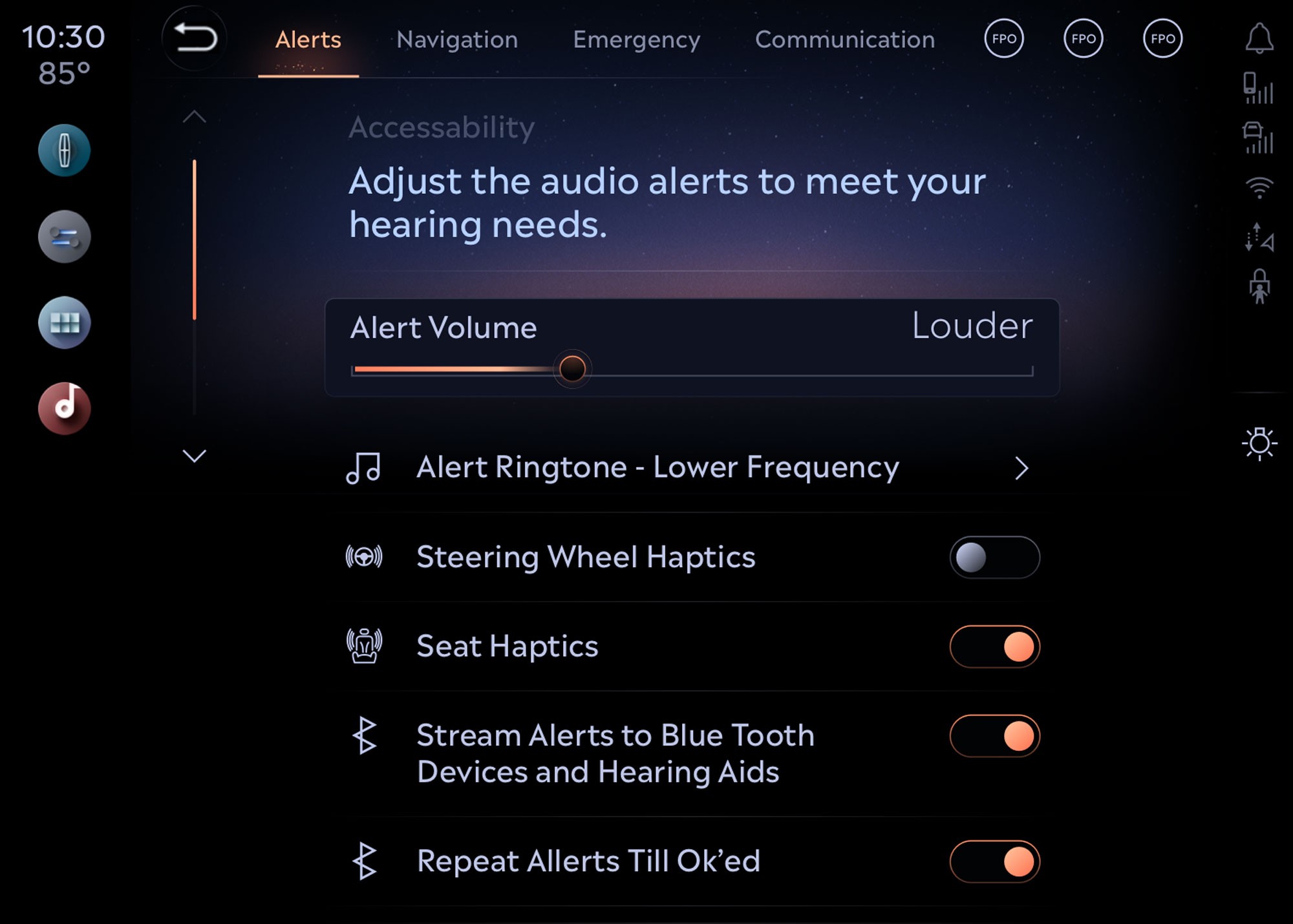
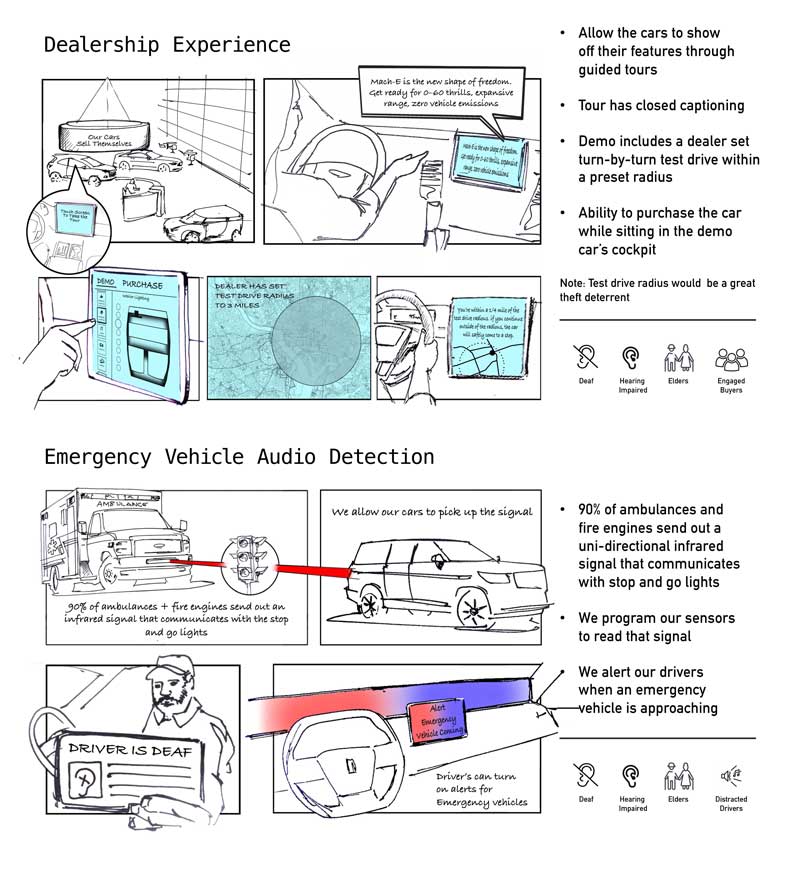
By reimagining how existing vehicle features could support my needs, I uncovered powerful accessibility opportunities already built into the platform. I explored using steering wheel and seat haptics as navigation cues, giving drivers clear directional feedback without relying on audio. I also leveraged the vehicle’s 11 cameras to support drivers and passengers who use American Sign Language, improving communication inside the cabin and during interactions like traffic stops and drive-thrus. With built-in microphones, we began testing whether the system could detect siren frequencies and surface emergency-vehicle awareness through visual and haptic alerts.

By reimagining how existing vehicle features could support my needs, I uncovered powerful accessibility opportunities already built into the platform. I explored using steering wheel and seat haptics as navigation cues, giving drivers clear directional feedback without relying on audio. I also leveraged the vehicle’s 11 cameras to support drivers and passengers who use American Sign Language, improving communication inside the cabin and during interactions like traffic stops and drive-thrus. With built-in microphones, we began testing whether the system could detect siren frequencies and surface emergency-vehicle awareness through visual and haptic alerts.

By reimagining how existing vehicle features could support my needs, I uncovered powerful accessibility opportunities already built into the platform. I explored using steering wheel and seat haptics as navigation cues, giving drivers clear directional feedback without relying on audio. I also leveraged the vehicle’s 11 cameras to support drivers and passengers who use American Sign Language, improving communication inside the cabin and during interactions like traffic stops and drive-thrus. With built-in microphones, we began testing whether the system could detect siren frequencies and surface emergency-vehicle awareness through visual and haptic alerts.

Deaf Driving Digital Experiences
Deaf Driving: In-Vehicle and Outside Communication


The Roll Out Of The Idea

This was the first commercial shaped by the Accessibility Team, and it marked a turning point for bringing Deaf driving concepts to a broader audience. As we began sharing the work publicly, the goal was to introduce these ideas in a clear, relatable way and show how accessible in-vehicle communication can improve everyday moments for more drivers.

This was the first commercial shaped by the Accessibility Team, and it marked a turning point for bringing Deaf driving concepts to a broader audience. As we began sharing the work publicly, the goal was to introduce these ideas in a clear, relatable way and show how accessible in-vehicle communication can improve everyday moments for more drivers.

This was the first commercial shaped by the Accessibility Team, and it marked a turning point for bringing Deaf driving concepts to a broader audience. As we began sharing the work publicly, the goal was to introduce these ideas in a clear, relatable way and show how accessible in-vehicle communication can improve everyday moments for more drivers.

MORE PROJECTS